

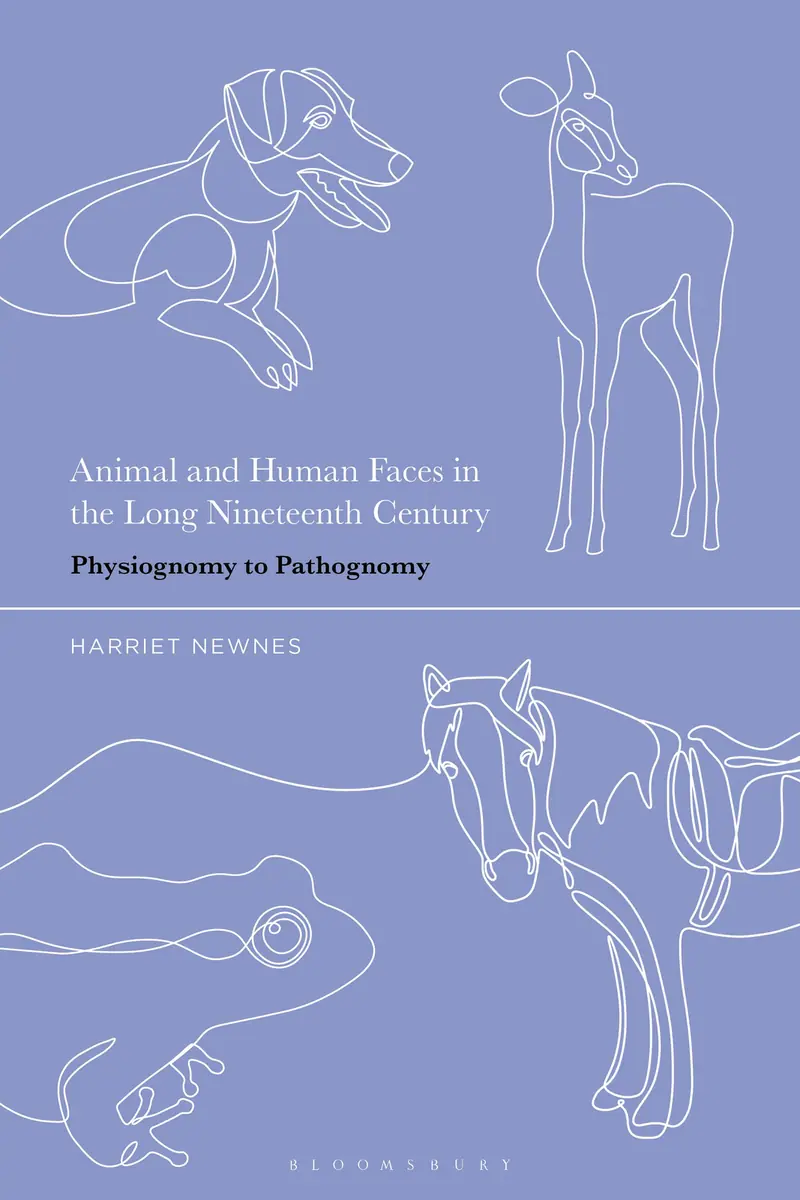
Animal and Human Faces in the Long Nineteenth Century: Physiognomy to Pathognomy
cover
Wish list
Share
Share this book
Readership
Animal and Human Faces in the Long Nineteenth Century: Physiognomy to Pathognomy
A unique investigation into the relationship between changing conceptions of animals and humans in the long nineteenth century, this book examines the different ways in which faces were read over the long nineteenth century, demonstrating how developing evolutionary science and changing…
Buy now $190.00
readership.com.au/book/animal-and-human-faces-in-the-long-nineteenth-century-physiognomy-to-pathognomy
Pre-order
Animal and Human Faces in the Long Nineteenth Century: Physiognomy to Pathognomy
About this book
A unique investigation into the relationship between changing conceptions of animals and humans in the long nineteenth century, this book examines the different ways in which faces were read over the long nineteenth century, demonstrating how developing evolutionary science and changing classifications of species influenced face-reading theories.
Setting scientific writing in dialogue with literary, philosophical, and periodical texts, this book re-evaluates the physiognomic theory of Johann Casper Lavater and charts how nineteenth-century writers such as Charles Bell, Guillaume Duchenne, and Charles Darwin responded to Lavater's work with their own prioritisation of expressive faces. It uses the fictional writing of Mary Shelley, Charles Dickens, George Eliot, and H.G. Wells to argue that the depiction of animal and human faces and the relation between the two is central to character formation, plot, and reader response during the long nineteenth century.
Setting scientific writing in dialogue with literary, philosophical, and periodical texts, this book re-evaluates the physiognomic theory of Johann Casper Lavater and charts how nineteenth-century writers such as Charles Bell, Guillaume Duchenne, and Charles Darwin responded to Lavater's work with their own prioritisation of expressive faces. It uses the fictional writing of Mary Shelley, Charles Dickens, George Eliot, and H.G. Wells to argue that the depiction of animal and human faces and the relation between the two is central to character formation, plot, and reader response during the long nineteenth century.
Product details
ISBN
9781350565234
Published
18 February 2027
Format
Hardcover
Pages
264
Dimensions
1 × 1 × 1 mm
Weight
0.001 kg
Publisher
Bloomsbury
Imprint
BLM ACADEMIC UK
Audience
General Adult
Best sellers in Literary Studies (1800–1900)
You might also like
Link copied