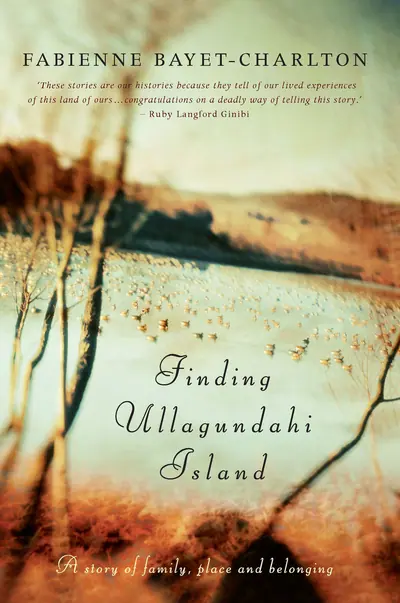
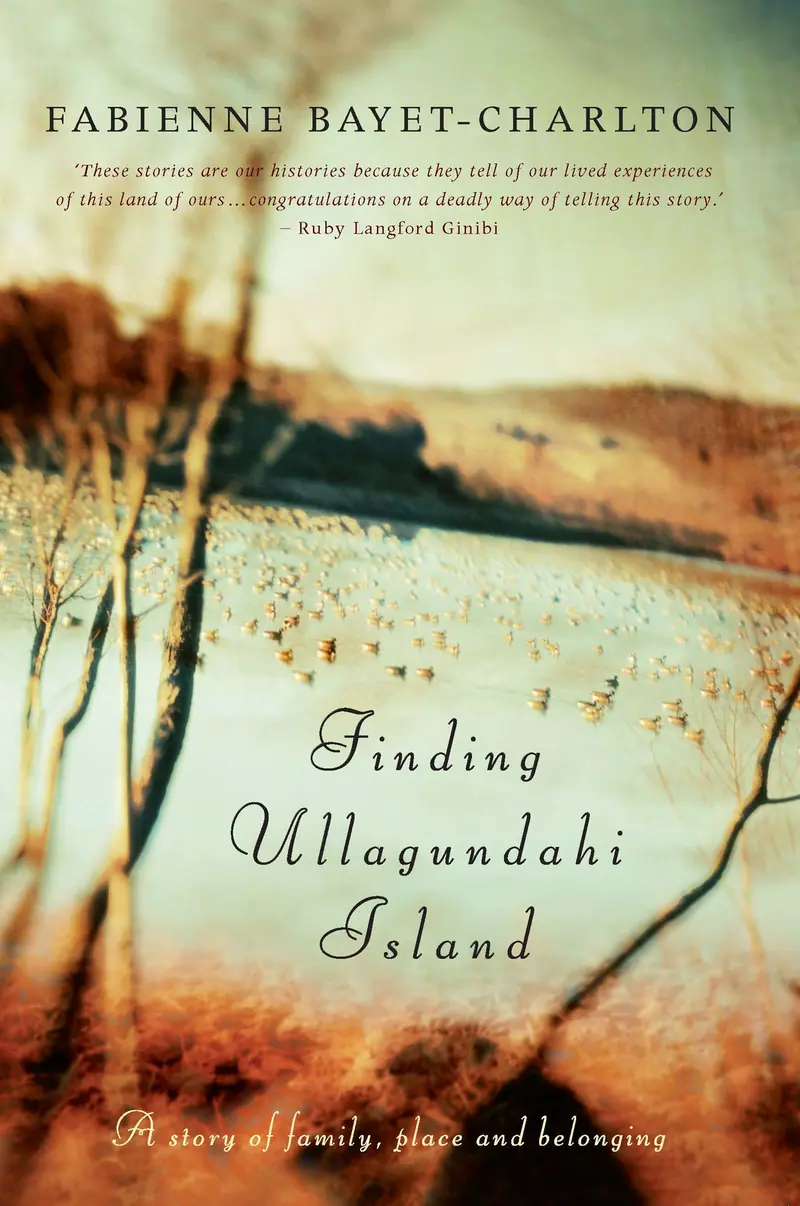
This fresh, lively memoir about family, place and a sense of belonging, identity and Aboriginality draws you in and holds you. Bayet-Charlton has a voice of honey when writing about landscape and Dreaming stories and she tells acutely and lovingly about family, childhood and memories.
'These stories are our histories because they tell of our lived experiences of this land of ours.congratulations on a deadly way of telling this story.' - Ruby Langford Ginibi
Creating new boundaries of fiction and memoir, Fabienne Bayet-Charlton's strong and original voice carries us with her in Finding Ullagundahi Island.
'Softly, quietly so as not to wake old feelings, and mabye old spirits, Nana speaks about her life, about her family, her childhood, before the desert. She talks of her home, the strength of her childhood. She tells me about a river so wide, blue and meandering that her people lived in the middle of it, and trees so dense in numbers, so thick with leaves, they created a canopy of green mist throughout the land.
I sit there with my feet planted in acrid red dust, looking into my pale tea. Not believing.
'How can people live on a river, Nana? Like it's land? How can a river be that big?'
Nana eyes me up and down, like a wise old turtle.
'Because it is.' She sighs, sips her tea and says nothing more.'
This fresh, lively memoir about family, place and a sense of belonging, identity and Aboriginality draws you in and holds you. Fabienne has a voice of honey when writing about landscape and Dreaming stories and she tells acutely and lovingly about family, childhood and memories.