
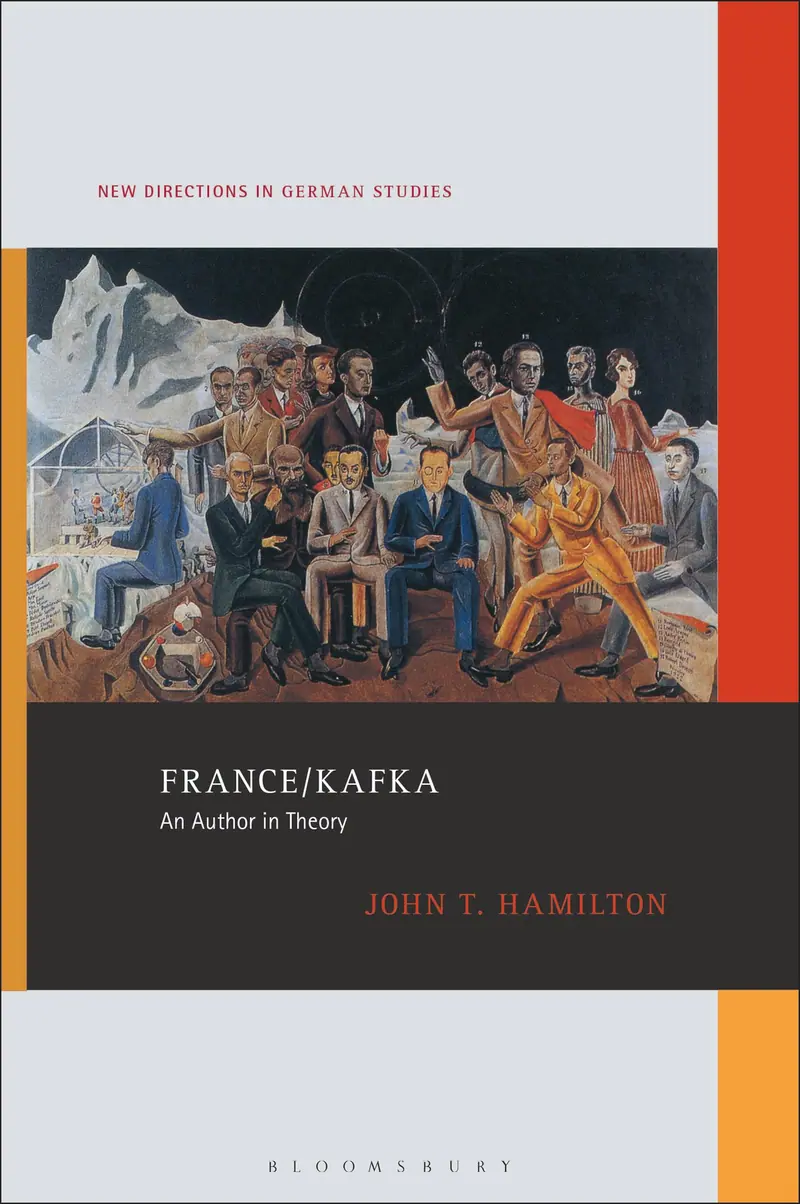
France/Kafka: An Author in Theory
cover
Wish list
Share
Share this book
Readership
France/Kafka: An Author in Theory
While his memory languished under Nazi censorship, Franz Kafka covertly circulated through occupied France and soon emerged as a cultural icon, read by the most influential intellectuals of the time as a prophet of the rampant bureaucracy, totalitarian oppression, and absurdity that branded the…
Buy now $44.99
readership.com.au/book/francekafka-an-author-in-theory
France/Kafka: An Author in Theory
About this book
While his memory languished under Nazi censorship, Franz Kafka covertly circulated through occupied France and soon emerged as a cultural icon, read by the most influential intellectuals of the time as a prophet of the rampant bureaucracy, totalitarian oppression, and absurdity that branded the twentieth century. In tracing the history of Kafka's reception in postwar France, John T. Hamilton explores how the work of a German-Jewish writer from Prague became a modern classic capable of addressing universal themes of the human condition.
Hamilton also considers how Kafka's unique literary corpus came to stimulate reflection in diverse movements, critical approaches, and philosophical schools, from surrealism and existentialism through psychoanalysis, phenomenology, and structuralism to Marxism, deconstruction, and feminism. The story of Kafka's afterlife in Paris thus furnishes a key chapter in the unfolding of French theory, which continues to guide how we read literature and understand its relationship to the world.
Hamilton also considers how Kafka's unique literary corpus came to stimulate reflection in diverse movements, critical approaches, and philosophical schools, from surrealism and existentialism through psychoanalysis, phenomenology, and structuralism to Marxism, deconstruction, and feminism. The story of Kafka's afterlife in Paris thus furnishes a key chapter in the unfolding of French theory, which continues to guide how we read literature and understand its relationship to the world.
Product details
ISBN
9798765100370
Published
6 April 2023
Format
Paperback
Pages
200
Dimensions
214 × 140 × 17 mm
Weight
0.28 kg
Publisher
Bloomsbury
Imprint
Bloomsbury Academic
Audience
General Adult
Best sellers in Literary Theory
You might also like

$19.99




$19.99


$19.99

$19.99
Link copied