

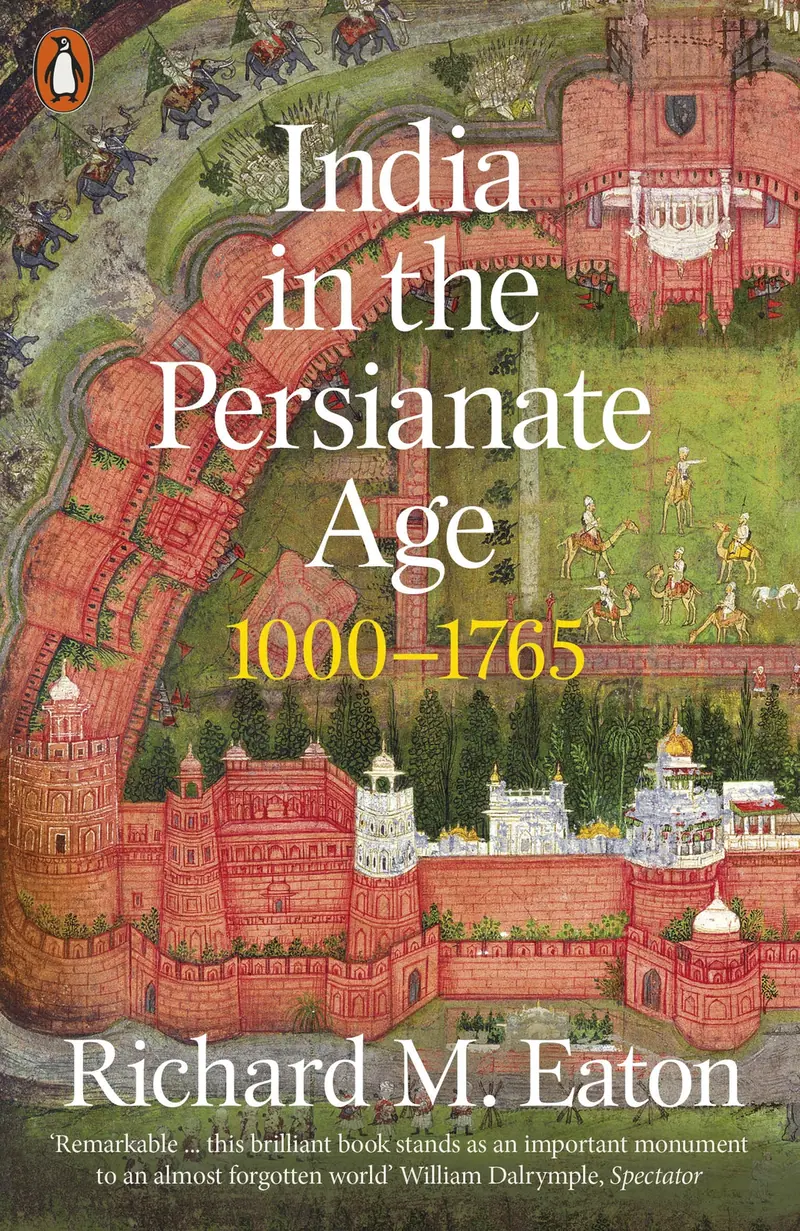
India in the Persianate Age
cover
Wish list
Share
Share this book
Readership
India in the Persianate Age
A magisterial history of the Indian subcontinent The Indian subcontinent might seem a self-contained world. Protected by vast mountains and seas, it has created its own religions, philosophies and social systems. And yet this ancient land experienced prolonged and intense interaction with the…
Buy now $26.99
readership.com.au/book/india-in-the-persianate-age
India in the Persianate Age
1000-1765
About this book
A magisterial history of the Indian subcontinent
The Indian subcontinent might seem a self-contained world. Protected by vast mountains and seas, it has created its own religions, philosophies and social systems. And yet this ancient land experienced prolonged and intense interaction with the peoples and cultures of East and Southeast Asia, Europe, Africa and, especially, Central Asia and the Iranian plateau between the eleventh and eighteenth centuries.
Richard M. Eaton's wonderful new book tells this extraordinary story with relish and originality. His major theme is the rise of 'Persianate' culture - a transregional world informed by a canon of texts that circulated across Asia. Introduced to India in the eleventh century by Afghan dynasties, this culture would become thoroughly indigenized by the time of the great Mughals in the sixteenth, seventeenth and eighteenth centuries. This long-term process of cultural interaction and assimilation is reflected in India's language, cuisine, attire, religion, styles of rulership and warfare, science, art, music, architecture and more.
The book brilliantly elaborates the complex encounter between India's Sanskrit culture - which continued to flourish and grow throughout this period - and Persian culture, which helped shape the Delhi Sultanate, the Mughal Empire and a host of regional states, and made India what it is today.
Product details
ISBN
9780141985398
Published
29 September 2020
Format
Paperback
Pages
512
Dimensions
197 × 128 × 25 mm
Weight
0.376 kg
Publisher
Penguin UK
Imprint
Penguin Press
Audience
General Adult
Listed in
Genres
Best sellers in Asian History
You might also like
$36.99
$74.99
$100.00


Link copied