
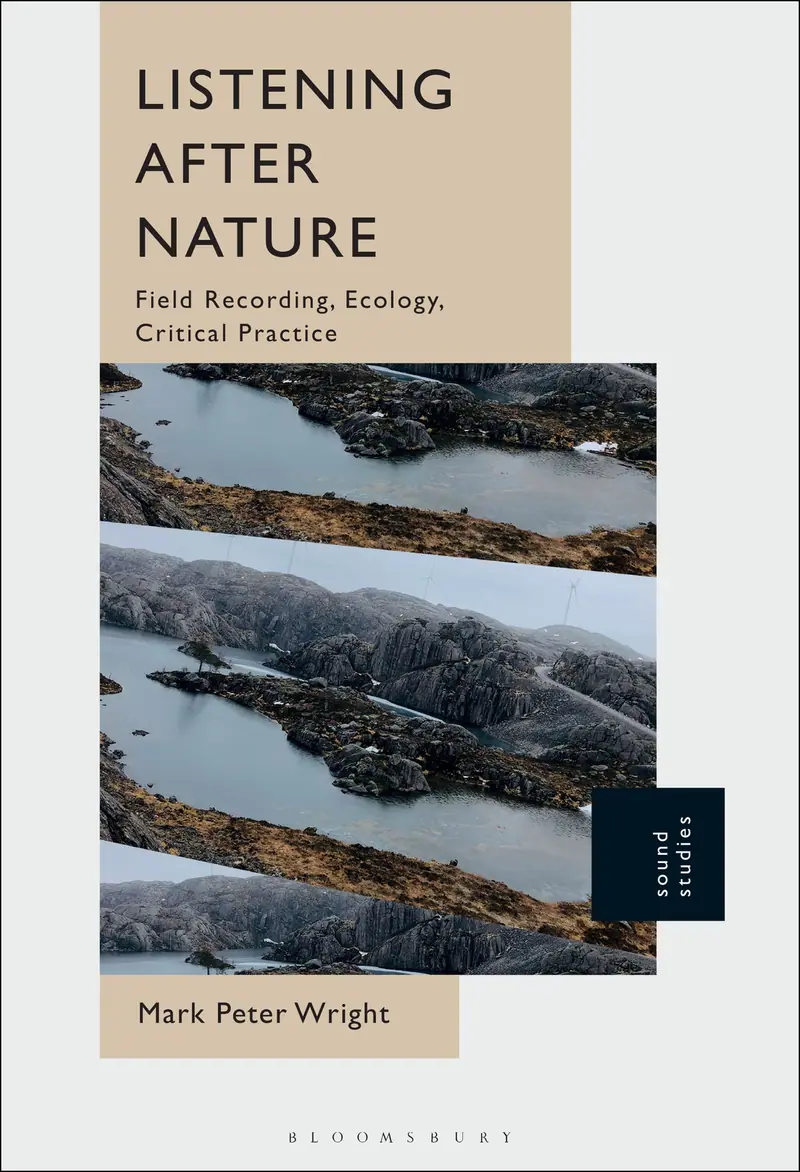
Listening After Nature: Field Recording, Ecology, Critical Practice
cover
Wish list
Share
Share this book
Readership
Listening After Nature: Field Recording, Ecology, Critical Practice
Listening After Nature examines the constructions and erasures that haunt field recording practice and discourse. Analyzing archival and contemporary soundworks through a combination of post-colonial, ecological and sound studies scholarship, Mark Peter Wright recodes the Field; troubles…
Buy now $61.99
readership.com.au/book/listening-after-nature-field-recording-ecology-critical-practice
Listening After Nature: Field Recording, Ecology, Critical Practice
About this book
Listening After Nature examines the constructions and erasures that haunt field recording practice and discourse. Analyzing archival and contemporary soundworks through a combination of post-colonial, ecological and sound studies scholarship, Mark Peter Wright recodes the Field; troubles conceptions of Nature; expands site-specificity; and unearths hidden technocultures. What exists beyond the signal? How is agency performed and negotiated between humans and nonhumans? What exactly is a field recording and what are its pedagogical potentials?
These questions are operated by a methodology of listening that incorporates the spaces of audition, as well as Wright's own practice-based reflections. In doing so, Listening After Nature posits a range of novel interventions. One example is the "Noisy-Nonself," a conceptual figuration with which to comprehend the presence of reticent recordists. "Contact Zones and Elsewhere Fields" offers another unique contribution by reimagining the relationship between the field and studio. In the final chapter, Wright explores the microphone by tracing its critical and creative connections to natural resource extraction and contemporary practice.
Listening After Nature auditions water and waste, infrastructures and animals, technologies and recordists, data and stars. It grapples with the thresholds of sensory perception and anchors itself to the question: what am I not hearing? In doing so, it challenges Western universalisms that code the field whilst offering vibrant practice-based possibilities.
Product details
ISBN
9781501392863
Published
28 December 2023
Format
Trade Paperback
Pages
222
Dimensions
233 × 156 × 17 mm
Weight
0.348 kg
Publisher
Bloomsbury
Imprint
Bloomsbury Academic
Audience
General Adult
Genres
Best sellers in Music
You might also like


$69.99
$29.99





Link copied