
 Look inside
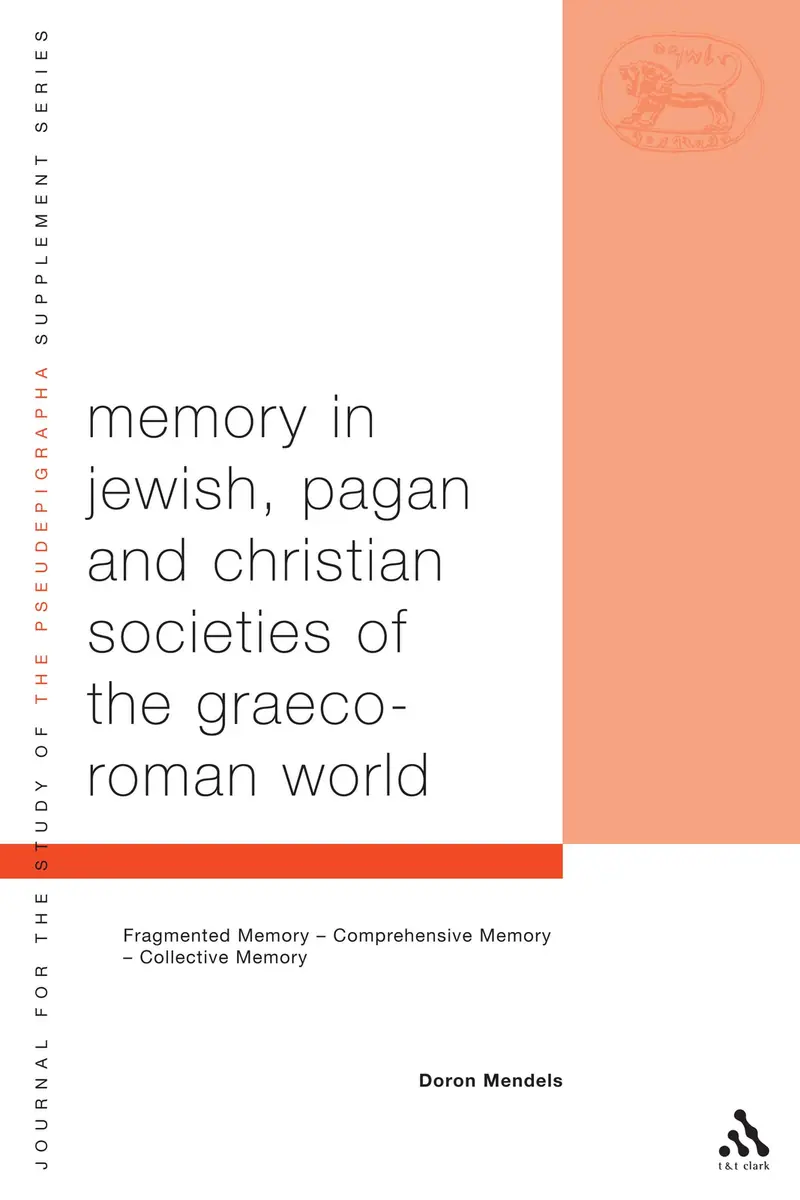
Memory in Jewish, Pagan and Christi: Fragmented Memory - Comprehensive Memory - Collective Memory
cover
Wish list
Share
Share this book
Readership
Memory in Jewish, Pagan and Christi: Fragmented Memory - Comprehensive Memory - Collective Memory
The ten studies in this book explore the phenomenon of public memory in societies of the Graeco-Roman period. Its various and shifting components are illustrated by studies of material ranging from Aeschylean tragedy, to the recent work of historian G. Alon in helping to formulate a fragment of…
Buy now $300.00
readership.com.au/book/memory-in-jewish-pagan-and-christi-fragmented-memory-comprehensive-memory-collective-memory
Memory in Jewish, Pagan and Christi: Fragmented Memory - Comprehensive Memory - Collective Memory
Fragmented Memory - Comprehensive Memory - Collective Memory
About this book
The ten studies in this book explore the phenomenon of public memory in societies of the Graeco-Roman period. Its various and shifting components are illustrated by studies of material ranging from Aeschylean tragedy, to the recent work of historian G. Alon in helping to formulate a fragment of modern Israeli collective memory of the Rabbinic period in Jewish history.
Mendels begins with a concise discussion of the historical canon that emerged in Late Antiquity and brought with it the (distorted) memory of ancient history in Western culture. Each of the next nine chapters focuses on a different source of collective memory in order to demonstrate the patchy and incomplete associations ancient societies had with their past, including discussions of Plato's Politeia, a 'site of memory' of the early Church (which formulated memories that became the basic blocks of the collective identity of the Catholic Church at the time), and the dichotomy existing between the reality of the Land of Israel in the Second Temple Period, and the memories of it.
Throughout the book, Mendels shows that since the societies of Antiquity had associations with only bits and pieces of their past, these associations could be slippery and problematic, constantly changing, multiplying and submerging. Memories, true and false, oral and inscribed, provide good evidence for this fluidity.
Product details
ISBN
9780567080547
Published
1 December 2004
Format
Paperback
Pages
184
Dimensions
231 × 158 × 1 mm
Weight
0.28 kg
Publisher
Bloomsbury
Imprint
T&T CLARK UK
Audience
General Adult
Listed in
Topics
Best sellers in Ancient History
You might also like
Look inside
$29.74
$34.99
15% OFF
$29.99
$50.99
$59.99
15% OFF
Link copied