
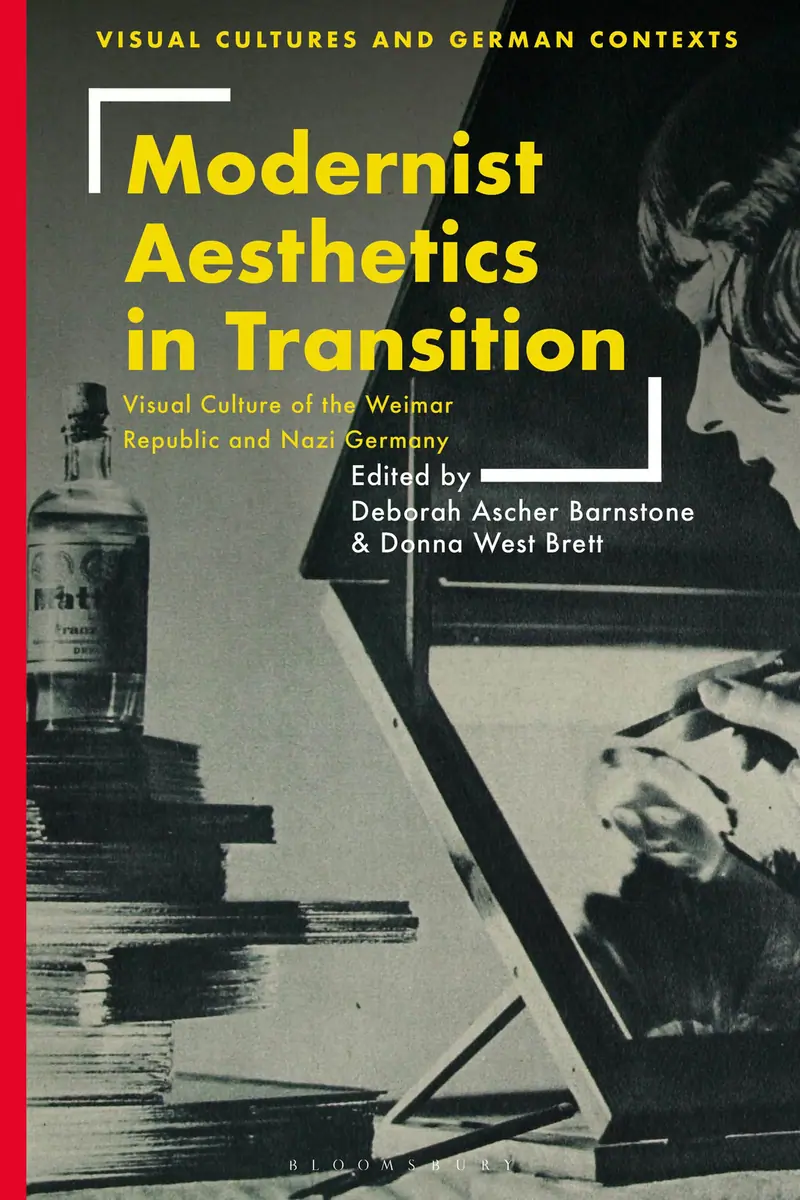
Modernist Aesthetics in Transition: Visual Culture of the Weimar Republic and Nazi Germany
cover
Wish list
Share
Share this book
Readership
Modernist Aesthetics in Transition: Visual Culture of the Weimar Republic and Nazi Germany
How did German aesthetic values change during the Weimar Republic and after its immediate collapse at the beginning of the National Socialist period? Contrary to conventional narratives that depict modernist aesthetics as static, shaping principles of modern art and design, this volume argues for…
Buy now $52.99
readership.com.au/book/modernist-aesthetics-in-transition-visual-culture-of-the-weimar-republic-and-nazi-germany
Pre-order
Modernist Aesthetics in Transition: Visual Culture of the Weimar Republic and Nazi Germany
About this book
How did German aesthetic values change during the Weimar Republic and after its immediate collapse at the beginning of the National Socialist period? Contrary to conventional narratives that depict modernist aesthetics as static, shaping principles of modern art and design, this volume argues for their complexity and ever-shifting nature.
Illuminating the vital exchanges that occurred across multiple art forms during a period of unmatched cultural activity, this multi-disciplinary volume explores the cultural transition between Weimar- and National Socialist-era Germany and offers a fresh perspective on the fate of modernism during a time of censorship and social stigma. Featuring essays on architecture, painting, photography, film, sculpture, cabaret, typography, and commercial design, the volume explores competing and comparable themes across German art from 1919-1945 and addresses how modern approaches like New Vision coexisted with more traditional and established artistic modes.
Such visual complexity is evident from the volume's eclectic coverage: these include 'sexology' and eroticism, visual grammar in typography and architecture, the reception of Weimar art in the National Socialist period, and the formation and transformation of queer and Jewish identities. The volume encompasses subjects as different as shadow in the animated films of Lotte Reininger, filmic adaptations of Heinrich Zille's social commentary in the 1920s, the photography of L iszlo Moholy-Nagy, and depictions of female sexuality in Magnus Hirschfeld's oeuvre. By bridging multiple artistic fields, this highly interdisciplinary work provides a fresh perspective on the ever-changing art and aesthetic principles of early-20th-century Germany.
Product details
ISBN
9781350442566
Published
7 January 2027
Format
Paperback
Pages
304
Dimensions
1 × 1 × 1 mm
Weight
0.001 kg
Publisher
Bloomsbury
Imprint
Bloomsbury Visual Arts
Audience
General Adult
Listed in
Best sellers in Art Theory
You might also like

Link copied