
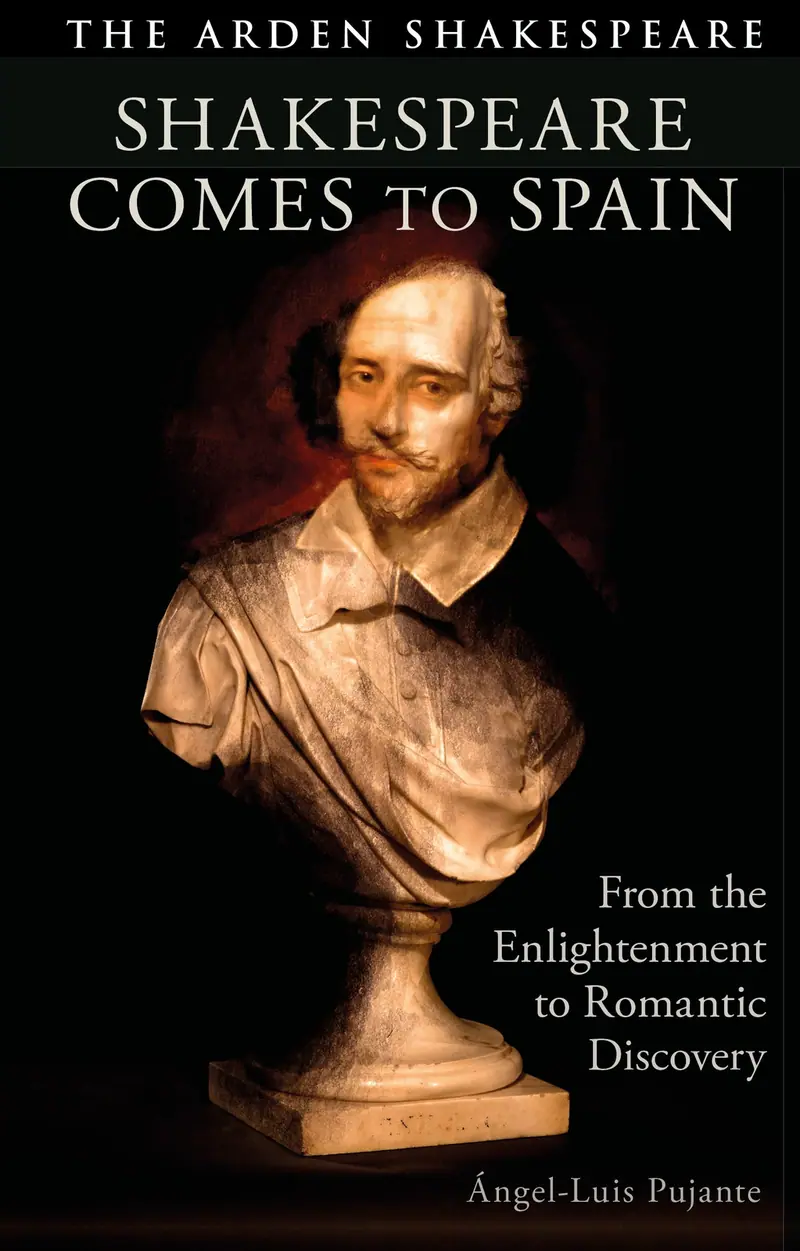
Shakespeare Comes to Spain: From the Enlightenment to Romantic Discovery
cover
Wish list
Share
Share this book
Readership
Shakespeare Comes to Spain: From the Enlightenment to Romantic Discovery
Charting the vicissitudes of Shakespeare's reception in Spain from the Age of the Enlightenment to Romanticism, this volume provides an interdisciplinary, transnational account of the initial resistance to his works and their later acceptance. Shakespeare came to Spain via France in the 18th…
Buy now $200.00
readership.com.au/book/shakespeare-comes-to-spain-from-the-enlightenment-to-romantic-discovery
Pre-order
Shakespeare Comes to Spain: From the Enlightenment to Romantic Discovery
About this book
Charting the vicissitudes of Shakespeare's reception in Spain from the Age of the Enlightenment to Romanticism, this volume provides an interdisciplinary, transnational account of the initial resistance to his works and their later acceptance.
Shakespeare came to Spain via France in the 18th century as the monster created by Voltaire, bringing with him the neoclassical critiques of his qualities and defects. As the influence of the pre-romantics and romantics who venerated Shakespeare spread throughout Western Europe, a consequent reappraisal of his works, including his dramatic language and ability to create memorable characters, redeemed these perceived flaws. By examining this changing reception, Pujante reveals how recognition of Shakespeare's singularity ultimately made any neoclassical concerns redundant.
Three factors stand out as primary contributors to Shakespeare's reception. First, the tendency to view him as the archetypal author of whatever versions of his plays were being staged, made explicit in the reception of Othello and Romeo and Juliet. Secondly, the influence of moderate classicists like Hugh Blair favouring Shakespeare and the gradual acceptance of 'historical Romanticism' which argued his works should not be judged by classicist rules. Thirdly, the conversion from Classicism to Romanticism and the discovery of Shakespeare by the Spanish liberals exiled in England (1823-1833), particularly in the case study of Blanco White, who assimilated Schlegel's and Coleridge's romantic aesthetics and applied them to Shakespeare.
Product details
ISBN
9781350576056
Published
18 February 2027
Format
Hardcover
Pages
224
Dimensions
1 × 1 × 1 mm
Weight
0.001 kg
Publisher
Bloomsbury
Imprint
THE ARDEN SHAKESPEARE UK
Audience
General Adult
Topics
Best sellers in Studies of Plays & Playwrights
You might also like

$21.99

$34.99




$22.99


Link copied