
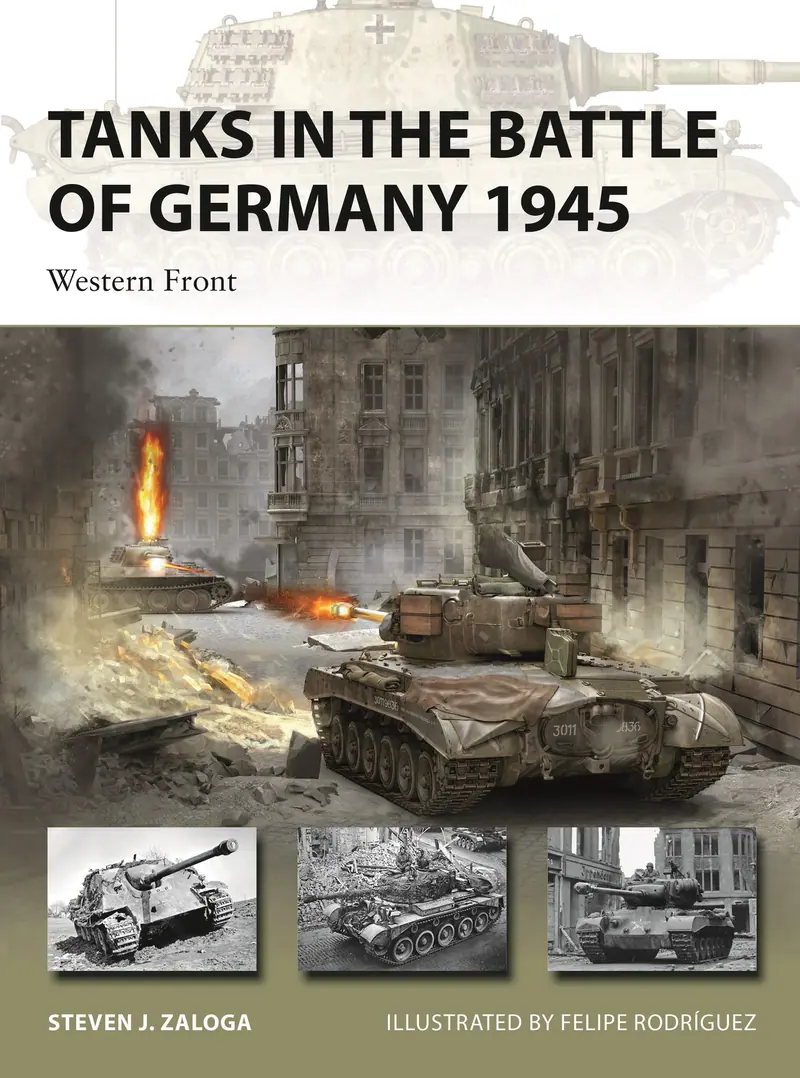
Tanks in the Battle of Germany 1945: Western Front
cover
Wish list
Share
Share this book
Readership
Tanks in the Battle of Germany 1945: Western Front
The crossing of the river Rhine marked the beginning of the end of the Third Reich, but the Wehrmacht would fight ferociously on its home soil until the fall of Berlin. The Battle of Germany saw the most advanced tanks of the Allies pitted against the remnants of the once-formidable Panzerwaffe…
Buy now $27.99
readership.com.au/book/tanks-in-the-battle-of-germany-1945-western-front
Tanks in the Battle of Germany 1945: Western Front
About this book
The crossing of the river Rhine marked the beginning of the end of the Third Reich, but the Wehrmacht would fight ferociously on its home soil until the fall of Berlin.
The Battle of Germany saw the most advanced tanks of the Allies pitted against the remnants of the once-formidable Panzerwaffe, now exhausted and lacking many of the essentials of armored warfare, but equipped with the biggest and most powerful tanks they would ever field.
In these last months the Allies were now equipped with the most advanced Shermans such as the M4A3E8, as well as some of the types that would go on to have successful postwar careers such as the Pershing, Comet, and Chaffee. In contrast the Panzer forces had pinned their hopes on small numbers of monstrous types such as the Jagdtiger and Tiger II, as well as the workhorse Sturmgesch tz and Panzer IVs and Vs. But with German forces crumbling, the Panzerwaffe lacked trained crews, replacement vehicles and fuel, while the Allies' well-supported tank forces advanced through Germany in spectacular combined-arms fashion.
Packed with information on tank numbers, types, and comparative performance, this book sheds new light on the two sides' tanks, organization, and doctrine, and explains how the ultimate tank battles of World War II were really fought.
Product details
ISBN
9781472848116
Published
29 March 2022
Format
Paperback
Pages
48
Dimensions
247 × 185 × 4 mm
Weight
0.166 kg
Publisher
Bloomsbury
Imprint
Osprey
Audience
General Adult
Topics
Genres
Best sellers in World War II
You might also like
$39.99

$39.99
Staff Pick
Link copied