
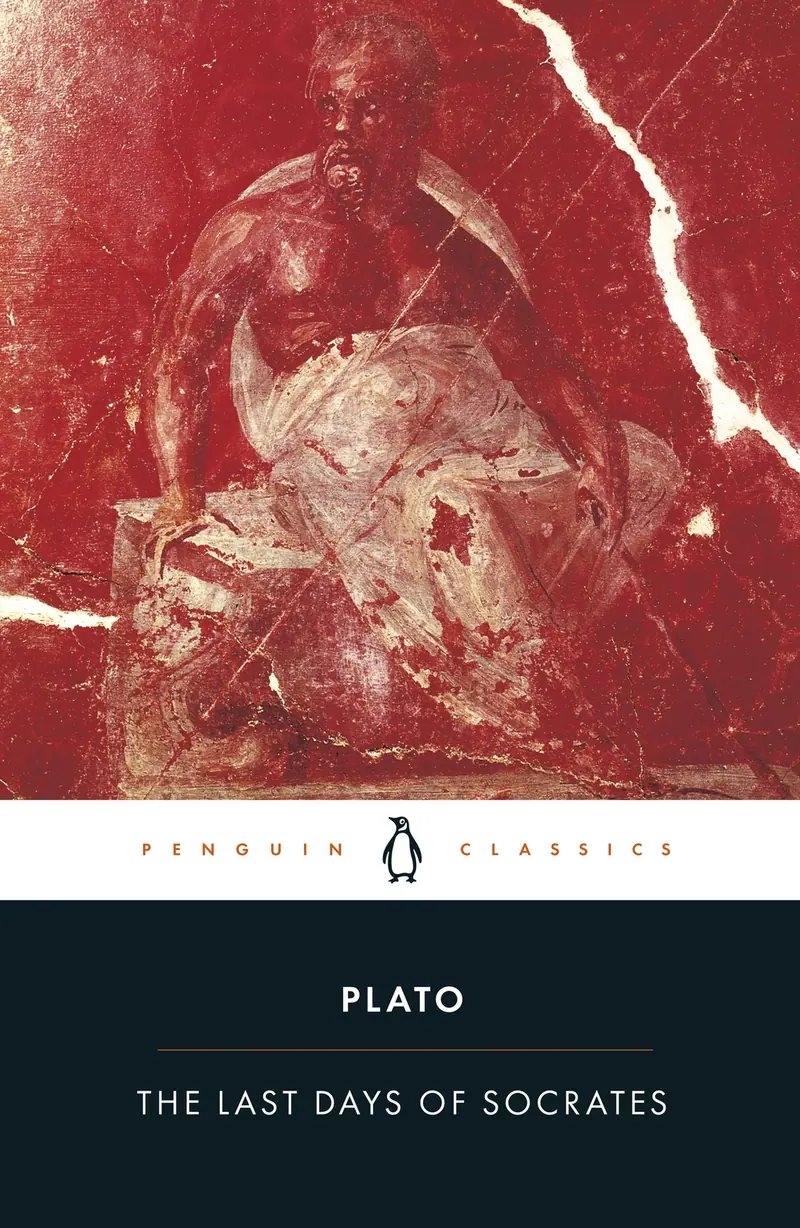
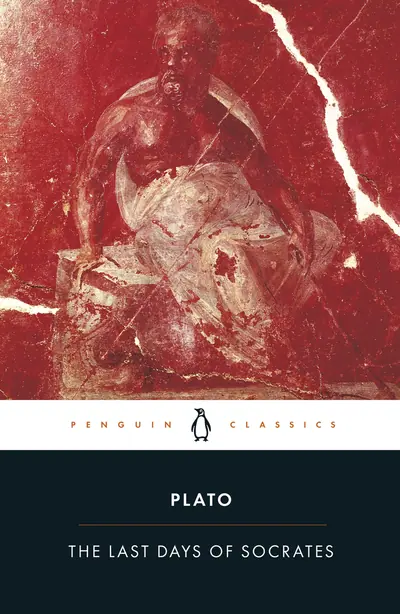
The Last Days of Socrates
cover
Wish list
Share
Share this book
Readership
The Last Days of Socrates
Penguin Classics relaunch. The trial and condemnation of Socrates on charges of heresy and corrupting young minds is a defining moment in the history of Classical Athens. In tracing these events through four dialogues, Plato also developed his own philosophy, based on Socrates' manifesto for a life…
Buy now $22.99
readership.com.au/book/the-last-days-of-socrates
The Last Days of Socrates
About this book
Penguin Classics relaunch.
The trial and condemnation of Socrates on charges of heresy and corrupting young minds is a defining moment in the history of Classical Athens. In tracing these events through four dialogues, Plato also developed his own philosophy, based on Socrates' manifesto for a life guided by self-responsibility. Euthyphro finds Socrates outside the court-house, debating the nature of piety, while The Apology is his robust rebuttal of the charges of impiety and a defence of the philosopher's life. In the Crito, while awaiting execution in prison, Socrates counters the arguments of friends urging him to escape. Finally, in the Phaedo, he is shown calmly confident in the face of death, skilfully arguing the case for the immortality of the soul.
The trial and condemnation of Socrates on charges of heresy and corrupting young minds is a defining moment in the history of Classical Athens. In tracing these events through four dialogues, Plato also developed his own philosophy, based on Socrates' manifesto for a life guided by self-responsibility. Euthyphro finds Socrates outside the court-house, debating the nature of piety, while The Apology is his robust rebuttal of the charges of impiety and a defence of the philosopher's life. In the Crito, while awaiting execution in prison, Socrates counters the arguments of friends urging him to escape. Finally, in the Phaedo, he is shown calmly confident in the face of death, skilfully arguing the case for the immortality of the soul.
Product details
ISBN
9780140449280
Published
27 May 2003
Format
Paperback
Pages
304
Dimensions
197 × 127 × 20 mm
Weight
0.226 kg
Publisher
Penguin UK
Imprint
Penguin
Audience
General Adult
Genres
Best sellers in Ancient Western Philosophy
You might also like
$26.99
Link copied