

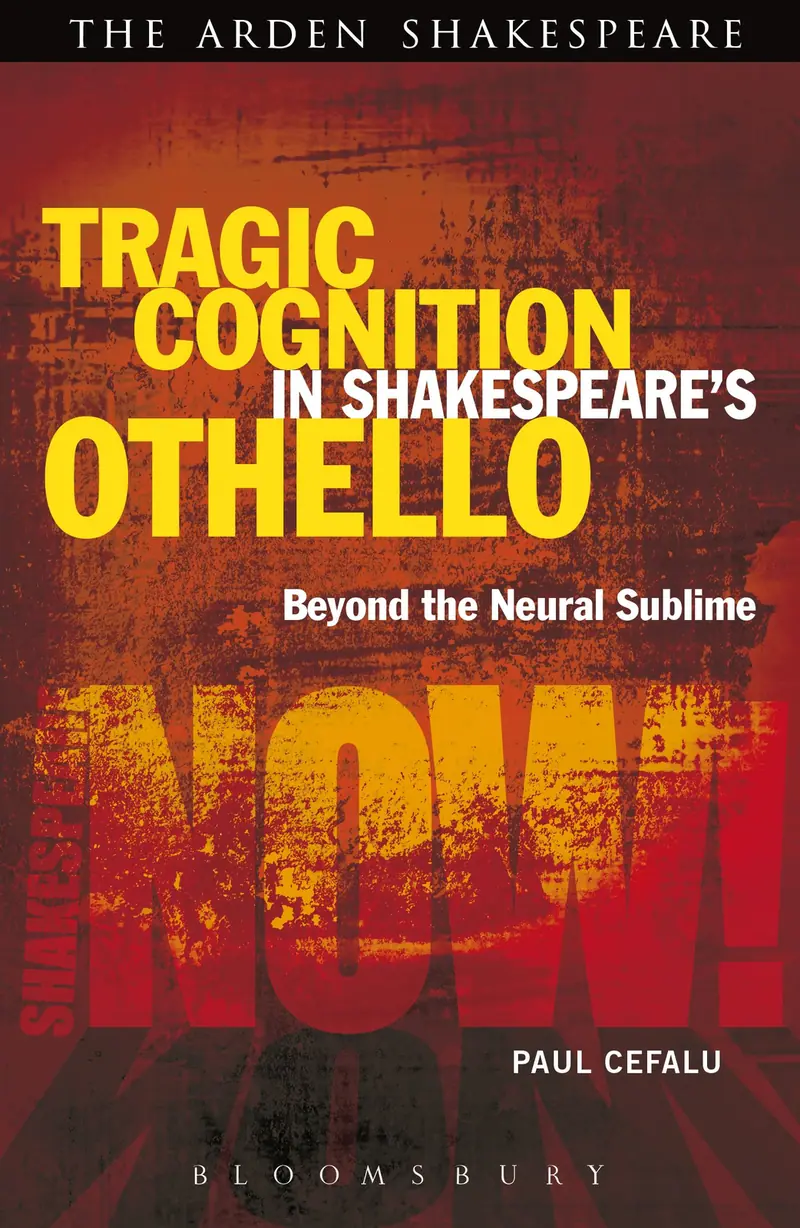
Tragic Cognition in Shakespeare's Othello: Beyond the Neural Sublime
cover
Wish list
Share
Share this book
Readership
Tragic Cognition in Shakespeare's Othello: Beyond the Neural Sublime
As the cognitive revolution has begun heavily to influence Shakespeare and early modern studies, related critical methodologies such as psychoanalytic criticism have begun to seem provincial, outworn, or, in some more hostile quarters, simply misdirected. If we are indeed living through a cognitive…
Buy now $49.99
readership.com.au/book/tragic-cognition-in-shakespeares-othello-beyond-the-neural-sublime
Tragic Cognition in Shakespeare's Othello: Beyond the Neural Sublime
About this book
As the cognitive revolution has begun heavily to influence Shakespeare and early modern studies, related critical methodologies such as psychoanalytic criticism have begun to seem provincial, outworn, or, in some more hostile quarters, simply misdirected. If we are indeed living through a cognitive revolution and age of the brain, the time seems appropriate to revisit psychoanalytic criticism, not in order to displace, but rather to supplement, the application of brain science to literary analysis.
This book represents the first attempt to bring together cognitive and psychoanalytic criticism, through a startling new analysis of Iago's character. Iago is a recalcitrant literary figure and neither cognitive nor psychoanalytic theory alone can explain our strange, embarrassed kinship with him, nor the unique ways in which Iago's very staging of his own catharsis prevents a full purgation of our pity and fear.
Through looking at both critical methodologies, Paul Cefalu opens up new insights into the mechanisms of tragic identification and catharsis within Othello.
Product details
ISBN
9781472523464
Published
21 May 2015
Format
Paperback
Pages
136
Dimensions
194 × 129 × 8 mm
Weight
0.154 kg
Publisher
Bloomsbury
Imprint
THE ARDEN SHAKESPEARE UK
Audience
General Adult
Best sellers in Literary Criticism & History
You might also like



$19.99

$22.99
$19.99




$49.99

Link copied